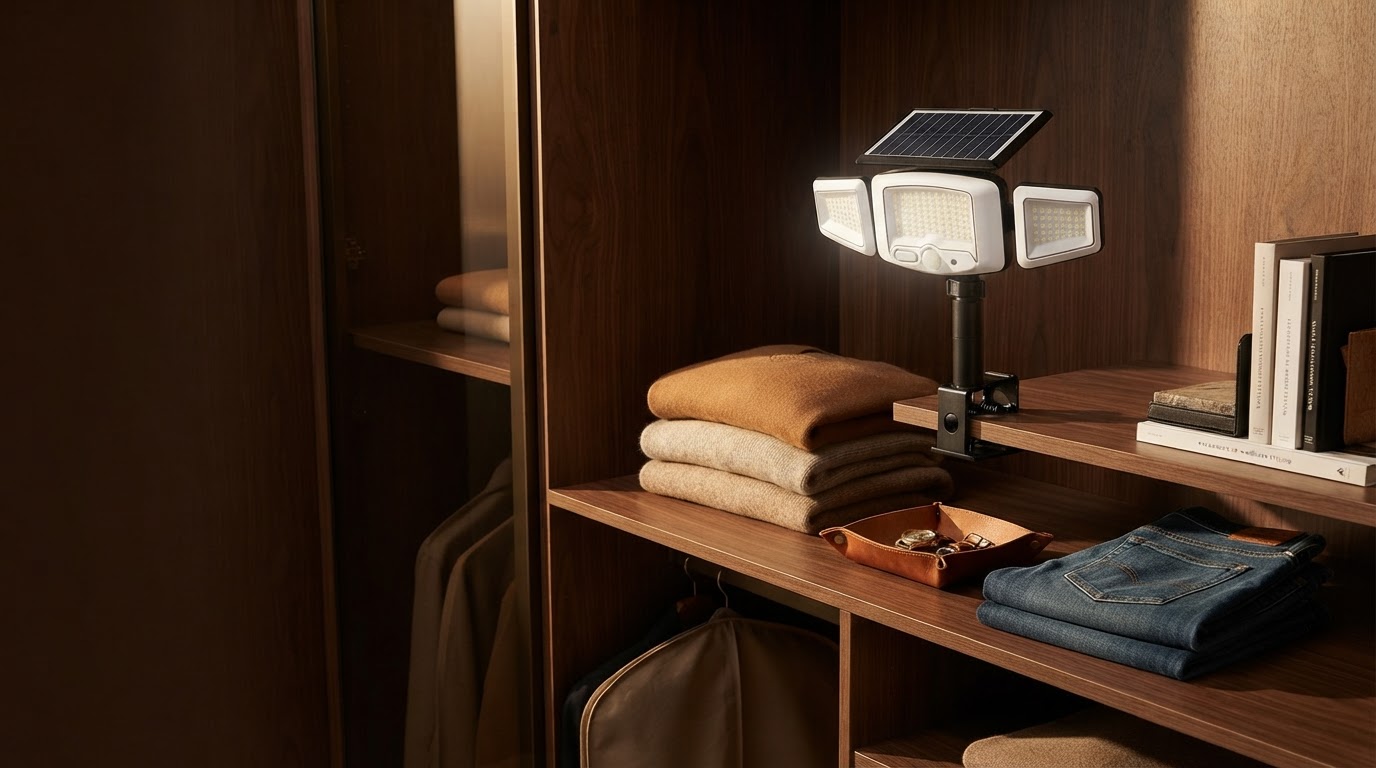
Solar Motion Sensor Flood Light Solutions for Dark Closets
 Sam VasquezBuying Guide Lead
September 8, 2026. Finding items in a dim closet requires specific lighting hardware that activates instantly without manual switches. This guide assists homeowners in selecting the right motion-activated fixtures for confined storage spaces and walk-in wardrobes.
The Challenge of Dark Storage Spaces
Most residential closets are designed with a single overhead light or, in many older homes, no integrated lighting at all. This lack of visibility leads to disorganized shelving and wasted time during morning routines. According to the National Association of Home Builders, effective storage and organization are consistently among the top features requested by modern homebuyers, yet lighting remains an afterthought in these small spaces. When you can't see the back of a shelf, you don't use the space effectively. Traditional wired solutions often require expensive electrical work that involves cutting into drywall and running new circuits, which is a significant barrier for renters or those on a strict renovation budget.
If you're on a budget, you might be tempted to just stick a manual battery-operated puck light on the wall, but I find these are rarely used because people forget to turn them off, leading to dead batteries within a week. This is where motion sensing becomes essential. It ensures the light is only active when the door is open or movement is detected, preserving energy. For those looking for broader applications beyond the closet, such as under cabinet motion sensor lighting, the same principles of detection range and color temperature apply. However, closets present unique challenges because they are enclosed, meaning the sensor needs to be highly responsive the moment the door swings open to prevent a delay in illumination.
Solar Motion Sensor Flood Light Integration
The Solar Motion Sensor Flood Light offers a distinct advantage for closets located near exterior walls or in outbuildings like sheds and detached garages where traditional power is unavailable. While a flood light might seem overpowered for a small reach-in closet, its high-lumen output is ideal for large walk-in wardrobes or basement storage areas where you need to see every corner clearly. The integration of a motion sensor means the unit remains dormant until you enter the space, providing a burst of daylight-balanced light that makes color-matching clothes significantly easier than standard warm-toned incandescent bulbs.
Between these two options—a standard battery light and a Solar Motion Sensor Flood Light—I'd go with the solar-powered unit for any storage area that has access to a window or is located in an external structure. The reliability of not having to swap out AA batteries every month is a massive practical win. For smaller, internal spaces like a kitchen cupboard, you might consider motion activated pantry lighting which typically uses smaller form factors. But for the heavy-duty visibility required in a deep closet, the flood light's wide beam angle ensures no shadows are cast behind hanging garments. If you are working with a standard interior closet with zero light access, a rechargeable [motion sensor night light](/blog/rechargeable-motion-sensor-night-light) is a better fit, as you can simply plug it into a wall outlet to refresh the internal cell. However, for sheer power and hands-off maintenance, the solar-anchored systems are hard to beat in the right environment.
Decision Framework for Closet Illumination
When selecting your hardware, you need to evaluate the physical layout of your storage. Skip this if you have a tiny reach-in closet where a simple 100-lumen strip would suffice; this framework is for those managing larger spaces or external storage rooms. Here’s what I’d actually buy based on specific needs: for a walk-in, I prioritize a sensor with a 120-degree detection angle to ensure the light triggers as soon as my foot crosses the threshold. If I’m lighting a pantry, I look for low-profile units similar to under cabinet motion sensor lights to avoid bumping into the fixture while reaching for items.
Before finalizing your purchase, run through this checklist:
- Power Source: Determine if the unit has access to a solar charging point or if you prefer a rechargeable motion sensor night light that requires periodic USB charging.
- Lumen Output: Aim for at least 300 lumens for a walk-in closet to ensure full visibility of all shelves.
- Sensor Timeout: Look for fixtures that stay on for at least 30 seconds after motion stops to prevent the light from cutting out while you are standing still choosing an outfit.
- Mounting Style: Choose magnetic mounts for metal shelving or screw-in brackets for drywall to ensure the light doesn't fall over time.
- Color Temperature: Select a 'Cool White' (5000K) setting if you need to distinguish between dark blue and black clothing items.